

The 48 Hours After a Storm Decide How Fast Your Pool Comes Back
Brown water, a packed skimmer and a pump that sounds unhappy. Work the steps in this order and a ruined weekend turns into two short evenings with a net.
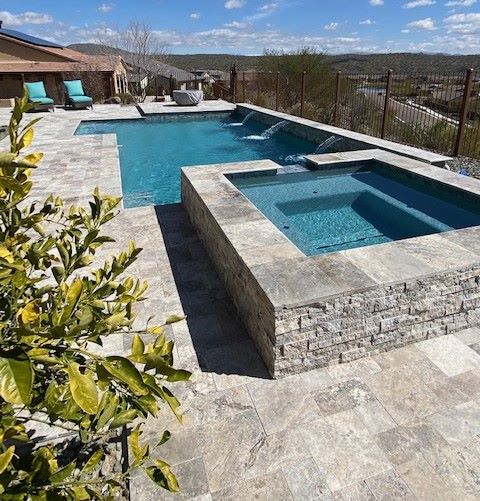
There is a specific shade of brown that only Phoenix homeowners recognize, and it tends to show up in the deep end about twenty minutes after the wind picks up. One moment the water is the clean blue you paid for. The next, a wall of dust has rolled across the valley floor, the palo verde in the corner of the yard has shed half of itself, and the surface looks like someone poured coffee into it.
Monsoon season here runs from roughly mid June through the end of September, and it has no interest in the fact that you just had the pool serviced. The reassuring part is that storm damage to a pool is nearly always cosmetic and nearly always reversible, as long as you work in the right order. Problems start when a homeowner panics, dumps in a gallon of shock, and runs the pump against a filter that is already packed solid. What follows is the sequence that actually brings the water back, plus the small habits that make the next storm far less dramatic.
What a Valley Storm Actually Leaves Behind
Not all monsoon mess is the same, and the type of debris in your pool changes what you should reach for first. A dust event and a downpour create two very different problems, and plenty of August nights hand you both within the same hour. Knowing which one you are dealing with saves you time, chemicals and a fair amount of frustration.
Dust, Silt and Ash
The fine tan powder that settles across the bottom after a dust storm is mostly desert silt, and it is so light that it billows back into suspension the second you touch it with a pole. It also carries more organic material than people expect, which is why water can look acceptable at sunrise and turn cloudy with a faintly swampy smell a day later. During wildfire season that layer can include ash, which is alkaline and will nudge your pH upward all on its own.
Plant Matter and Yard Debris
The second category is everything the wind tore loose from your landscaping, and this is where the real chemical demand comes from. The usual offenders in Valley backyards include:
- Palo verde and mesquite litter, which breaks down quickly and stains plaster if it sits
- Olive and citrus leaves, heavy enough to sink straight to the floor
- Bougainvillea bracts, which look harmless and bleed color into the water
- Roof grit and granules washed off composition shingles
- Landscape gravel pushed in by sheet flow running across the deck
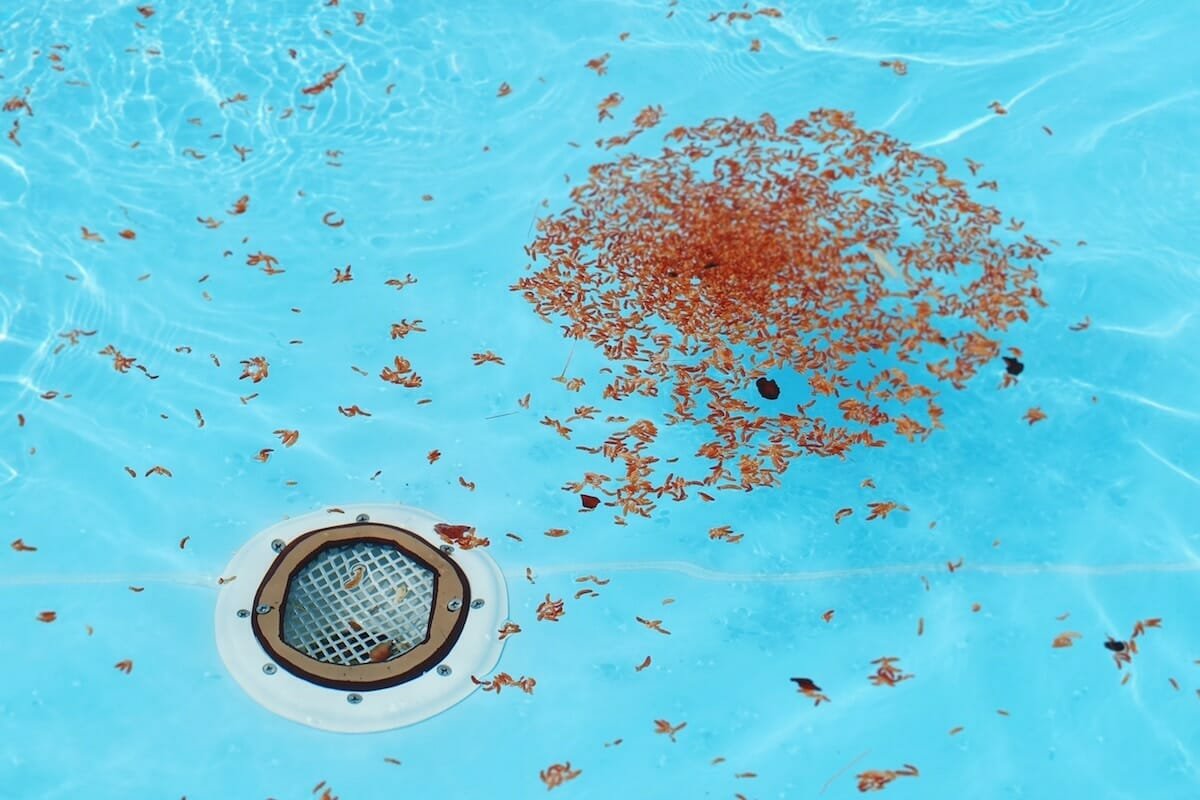
Anything organic is going to eat chlorine while it decomposes. That is the single biggest reason a pool looks fine the morning after a storm and turns green two days later.
The First Hour Belongs to Your Equipment
Before you touch a net, spend sixty seconds at the equipment pad. Storm cleanup is one of the few pool situations where the wrong first move turns a Saturday chore into a repair bill. A pump straining against a blocked skimmer runs dry, and a dry pump seal fails quietly and expensively.
Shut the system off, then empty both the skimmer baskets and the pump basket by hand. If the water level rose above the skimmer mouths during a heavy cell, the skimmers stop pulling surface debris entirely, so bring the level back down to the middle of the tile line before restarting anything. If the level dropped because the power was out and the autofill could not keep up, top it off first. Only once the baskets are clear and the level is right should the pump go back on.
The Cleanup Order That Actually Works
Most people clean a storm pool backwards. They vacuum first, watch the water turn into a snow globe, then spend three days chasing cloudiness around the shallow end. Working from the surface down, and from the largest debris to the smallest, keeps everything moving in one direction. It usually cuts recovery from a week to about two days.
- Net the surface before anything sinks. Floating leaves are easy. The same leaves on the floor at hour six are a staining risk.
- Empty the baskets again once the pump has run twenty minutes, because a second wave of debris always arrives.
- Brush the walls, steps and tanning ledge toward the main drain, then let the silt settle overnight.
- Vacuum to waste rather than to filter if your equipment allows it, since fine monsoon silt will blind a cartridge almost instantly.
- Clean or backwash the filter last, after the heavy lifting is finished.
Why Brushing Beats Vacuuming on Day One
Silt that has settled into the texture of a pebble finish will not lift with suction alone. Brushing puts it back into the water column where the filter can catch it, and it scrubs off the early stages of any stain that started forming while the debris sat. Give extra attention to the shallow shelf and the waterline tile, because that is where organic material likes to park itself.
A Word on Robotic Cleaners
Robotic cleaners are excellent at maintenance and poor at disaster recovery. Sending one into a pool full of twigs and gravel is how you shred an impeller or jam a drive track. Let the pool get back to something close to normal, then put the robot back to work.
Rebalancing Water That Was Diluted and Dirtied at Once
Rain does two things to your chemistry at the same time, and they pull in opposite directions. The rain itself is soft and slightly acidic, so it dilutes calcium hardness and stabilizer while dragging pH down. The debris it delivers is organic and consumes chlorine while pushing demand up. Testing immediately after a storm and reacting to one number is how people end up chasing their own tail for a week.
Give the pump a full turnover cycle first, then test. The order that keeps things simple:
- Adjust total alkalinity before pH, since alkalinity is what holds pH steady
- Bring chlorine up gradually rather than in one heavy dose, especially on a colored or aggregate finish
- Check cyanuric acid after any significant rain, because diluted stabilizer means chlorine burns off in the July sun far faster than usual
- Save calcium hardness for an end of season check rather than testing it after every storm
If the water is still cloudy after two days of good filtration and correct chemistry, the filter is almost always the culprit rather than the chemicals.
The Same Storm, Very Different Backyards
Monsoon cleanup across the Valley is not one shared experience. Geography changes what lands in the water, and homeowners in different parts of the metro end up with very different chore lists after the same system passes through.
Out toward New River and Cave Creek, the washes run hard and fast, and sheet flow across a sloped lot can push decomposed granite over the coping in minutes. In Peoria, Waddell and out past the 303 in Surprise, the open farmland to the west means more airborne dust and a heavier silt layer on the floor. Older neighborhoods in central Scottsdale and along the Arcadia corridor deal with mature ash and citrus trees that drop far more organic material than a young desert landscape ever will. Up in Anthem and Carefree, the higher elevation brings cooler, wetter cells along with pine and juniper litter.
None of that changes the process. It only changes how often you are running it, and it is worth knowing which category your yard falls into before the first big cell of the season.
Getting Ahead of the Next One
A Valley summer will hand you somewhere between a handful and a couple dozen storm events, so the smartest work happens before the wind arrives rather than after it leaves. None of the following takes long, and each one shortens every cleanup that follows.
Before the Season
Trim back anything that overhangs the water, clean the filter thoroughly so it starts summer with full capacity, and make sure your stabilizer sits in a healthy range so chlorine has some protection from the sun. Check that deck drains and scuppers are clear, because a clogged drain is what turns an ordinary downpour into gravel in the shallow end.
Before a Specific Storm
When the forecast turns, spend ten minutes outside. Bring in the float, the umbrella and anything light enough to sail into the water. Cushions belong in the garage. Lower the water level slightly if heavy rain is expected. Turn the heater off at the panel so a power flicker does not confuse the controller.
Right After
Run the pump longer than usual for the next two days instead of adding more chemicals. Circulation and filtration do most of the real work, and giving them extra hours is cheaper and far gentler on your finish than shocking the pool repeatedly.
When the Mess Is Pointing at Something Bigger
Sometimes a storm does not create a problem so much as expose one. If the same corner of your deck floods every single time, if water pools against the coping instead of running away from it, or if debris keeps collecting in a spot where circulation is obviously dead, the storm is telling you something about how the backyard was built.
Staining that will not brush out, plaster that feels rough where it used to feel smooth, and skimmers that struggle even when clean are all worth a professional look. A pool with proper hydraulics, correctly placed returns and a deck that drains away from the shell is dramatically easier to live with through a Valley summer. If you are still in the planning stage, this is exactly the sort of detail worth raising during custom pool design, long before anything is poured. You can see how those decisions play out across finished projects in the Saturn Pools project gallery.
Storm Season Is a Rhythm, Not an Emergency
The homeowners who genuinely enjoy their pools through a Phoenix summer are not the ones with the least debris. They are the ones who have stopped treating every storm as a surprise. Protect the equipment first, work from the surface down, let the pump and filter carry the load, and test only after the water has had a chance to circulate. Handle it that way consistently and a storm that used to cost a whole weekend becomes two short evenings with a net.
It also helps to remember that a well built pool weathers a Valley summer better than a cheaply built one. Good drainage, sound hydraulics, a durable finish and thoughtful return placement all show up in how quickly your water bounces back in August. If your pool fights you through every monsoon, that is worth a conversation. Saturn Pools has been designing and building across the Phoenix area for years, and a free pool estimate is a simple way to find out whether the problem is the weather or the way the backyard was put together.
Thinking about a pool of your own?
Saturn Pools has been designing and building custom pools across the Valley for years. Tell us about your backyard and we will walk you through what is possible.
Get a free estimate